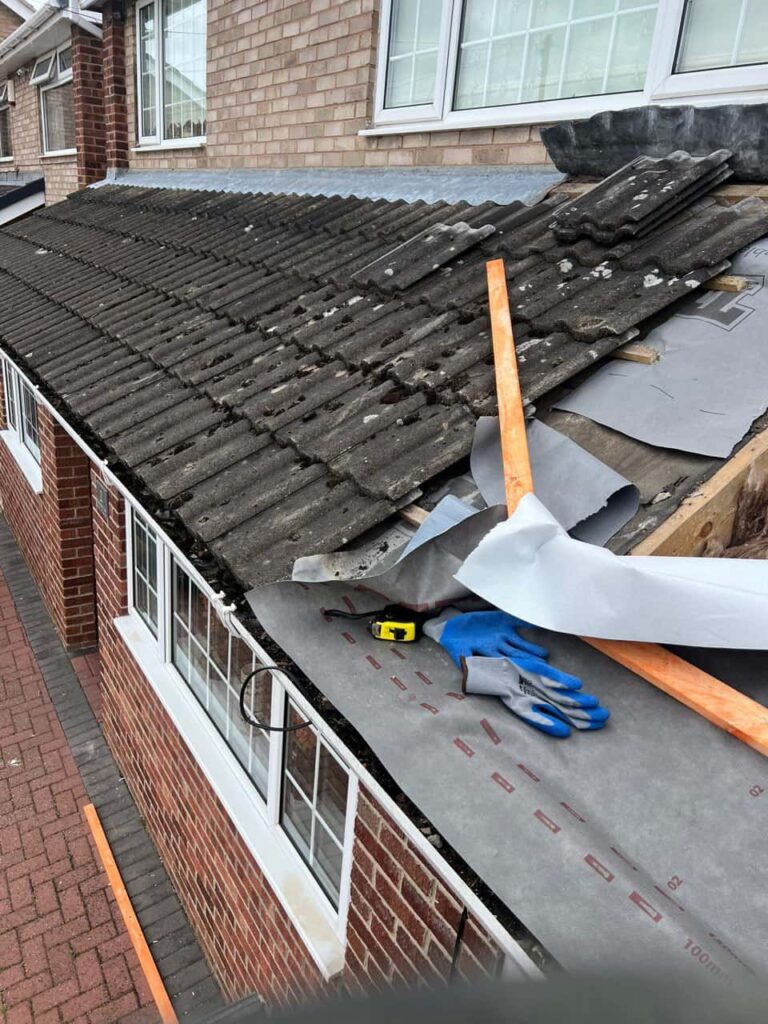
A roof leak that appears after heavy rain, dries out and then returns during the next prolonged downpour can be difficult to understand. The intermittent nature of the problem may suggest that the defect has corrected itself, but it usually means water only reaches the vulnerable area under particular weather conditions.
Recurring leaks should be investigated carefully because the visible damp patch may be some distance from the actual entry point. For property owners in Stowmarket, Suffolk, finding and repairing the underlying defect is essential if the problem is to be resolved properly.
Common Reasons Roof Leaks Return During Heavy Rain
Light rainfall may run off the roof without exposing a weakness. During heavier or prolonged rain, a greater volume of water moves across tiles, valleys, flashing and drainage channels. This can overwhelm a restricted outlet or allow water to penetrate a small defect that remains dry in milder conditions.
The Original Source Was Not Identified
Water does not always travel directly downwards from a roof defect. It can move along the underside of tiles, follow rafters or underlay and collect above a ceiling before becoming visible inside the property.
This means an internal damp patch may appear beneath a sound section of roof. Repairing the area immediately above the stain may therefore leave the actual entry point untouched.
A methodical inspection should trace the path of the moisture and examine likely entry points further up the roof.
Wind Is Driving Rain Beneath the Roof Covering
Rain falling vertically may not enter through a small gap, but wind-driven rain can be forced sideways beneath tiles, slates or poorly sealed junctions. This explains why a roof may remain dry during ordinary showers but leak during more severe weather.
Potential entry points include:
- Slightly displaced tiles or slates
- Gaps around roof edges and verges
- Damaged flashing
- Poorly sealed roof junctions
- Weak points around vents or roof windows
- Openings beneath ridge or hip materials
The direction of the wind can also affect whether the leak appears, making the problem seem unpredictable.
Lead Flashing Has Lifted or Cracked
Lead flashing protects vulnerable junctions around chimneys, adjoining walls and changes in roof level. If it has lifted, split or pulled away from the surrounding masonry, heavy rain can enter behind it.
Small flashing defects may not leak during brief showers. Prolonged rainfall gives water more time to work through the opening and reach the roof structure below.
The condition of the lead, its fixings, surrounding mortar and overlaps should all be examined rather than treating only the most visible gap.
Valleys Are Struggling to Carry the Water
Roof valleys collect water from two adjoining slopes, so they handle a much higher volume of rainfall than most other parts of the roof. Leaves, moss and debris can restrict the channel, while cracks, displaced materials or inadequate overlaps may allow water to escape beneath the covering.
During light rain, the valley may cope adequately. In a heavy downpour, water can back up, spill sideways or reach an existing weak point.
A recurring leak below a valley requires inspection of the full channel, not only the section nearest the internal damp mark.
Gutters or Outlets Are Overflowing
Blocked or poorly performing guttering can cause water to flow back towards the roof edge, fascia or adjoining masonry. During heavy rain, this overflow may enter through gaps that remain unaffected in normal conditions.
Warning signs can include water spilling over the gutter, staining beneath joints and dampness near the top of an external wall. Downpipes and outlets should also be checked, as a clear gutter cannot work effectively if water has nowhere to discharge.
The Underlay Has Deteriorated
Tiles and slates provide the roof’s main weather-resistant covering, while the underlay offers additional protection beneath them. Older underlay can tear, sag or deteriorate around fixings.
A minor covering defect may initially allow only a small amount of water beneath the tiles. If the underlay is intact, it may guide that moisture towards the eaves. Where it has failed, water can reach insulation, timber and ceilings.
Repairing a tile without considering the condition of the material below may leave the roof vulnerable to further leaks.
A Flat Roof Is Holding Standing Water
Flat roofs are designed with a slight fall to direct rainwater towards an outlet. If the surface has settled, drainage is restricted or the outlet is blocked, water may remain in low areas.
Prolonged ponding places additional pressure on seams, joints and small cracks. A defect that does not leak during light rainfall may begin allowing water through once it has been submerged for an extended period.
The surface, edges, outlets and junctions should all be assessed to determine whether the leak is caused by an isolated defect or a wider drainage problem.
Several Minor Defects May Be Contributing
A recurring leak is not always caused by one large opening. Water may enter through several smaller weaknesses, particularly on an ageing roof.
For example, a displaced tile, worn flashing and deteriorated underlay may combine to create a leak that only appears in heavy rain. Repairing one component could reduce the amount of water entering without stopping it completely.
Assessing the roof as a complete system helps identify whether several connected repairs are required.
Previous Patch Repairs Have Deteriorated
Short-term patches can fail when they are applied over damp, dirty or unstable materials. Some repair products also become brittle, separate from the surrounding surface or restrict the natural movement of roofing components.
If a leak returns near a previous repair, the area should be examined to establish whether the patch has failed or whether the original cause was never fully addressed. Repeatedly sealing the visible gap may only conceal a more significant defect.
Why the Timing of the Leak Matters
Details about when a leak appears can help narrow down its cause. Useful observations include:
- Whether the leak starts immediately or after several hours of rain
- Whether wind direction affects it
- Whether water appears during heavy showers or only prolonged rainfall
- Which room or ceiling area is affected
- Whether the damp patch continues growing after the rain stops
- Whether gutters overflow at the same time
These observations support a professional inspection, but they do not replace examination of the roof itself.
Conclusion
A roof leak that keeps returning after heavy rain usually indicates an unresolved defect, restricted drainage or water entering from a less obvious location. Because moisture can travel before appearing indoors, successful repair depends on tracing the complete route of the leak rather than simply patching the nearest visible area.
Stowmarket Roofing Repairs provides professional roof leak inspections and repairs in Stowmarket, Suffolk. If your roof continues to leak during heavy rain, contact our team to arrange an assessment and identify the most suitable repair.
Call us on: 01449 701 180
Click here to find out more about Stowmarket Roofing Repairs
Click here to complete our contact form and see how we can help with your roofing needs.